
Longer evenings are on the way! Daylight saving time starts on Sunday 4 October 2026, coinciding with the October long weekend in some parts of Australia.
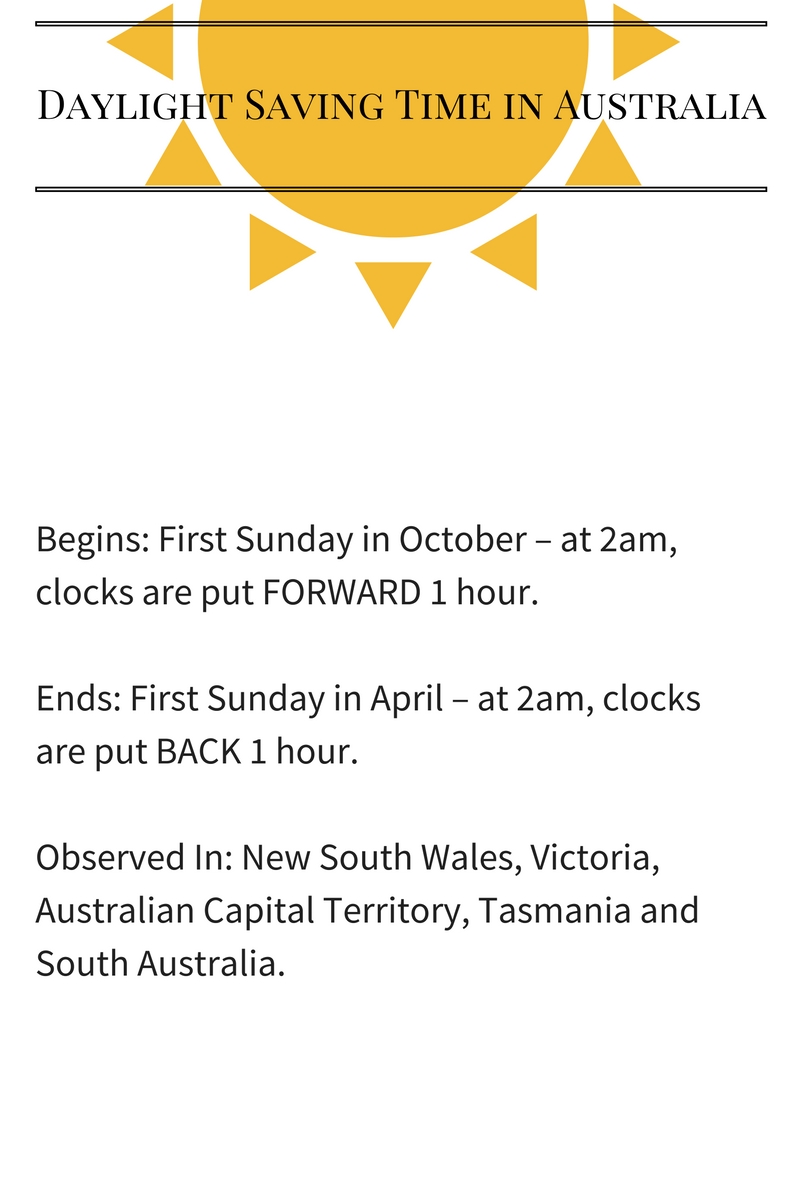
If you’re living in New South Wales, Victoria, the Australian Capital Territory, South Australia or Tasmania, your clocks will move forward one hour at 2 am, becoming 3 am. That means an hour less sleep that night, followed by more daylight in the evenings.
Queensland, Western Australia and the Northern Territory do not observe daylight saving, so their clocks stay the same. If you have friends interstate or are travelling between states, keep the changing time differences in mind.
Whether you’re planning a weekend away, heading to work or calling family overseas, here’s what you need to know before the clocks change.
Daylight Savings?! What! Why?
Daylight Savings Time is only practiced in some countries (or in certain states within those countries) and if you’ve never done it before, having everyone change their clocks at the same time might seem like a pretty bizarre thing to do.
The reason some places observe daylight savings is simply to make better use of sunlight in the summer months.
Further away from the equator, there is much more sunlight in summer than in the winter. Changing the clocks gives everyone an extra hour of sunlight to make use of in the evening, rather than having everyone sleep through that sunny hour in the mornings.
That may seem a little silly to some, and in Australia, the United States, and other countries, there is an ongoing debate about whether the practice is worth it.
People in favour of daylight savings say that it reduces road accidents, saves on household energy use and gives people more time to be out and active in the summer evenings.
Others say it’s disruptive and only a means of giving people more time to be out and spending money.
Do I have to change my clocks myself?
Most smartphones and computers will update automatically, but it’s worth checking that automatic date, time and time zone settings are enabled and your device is set to the correct location.
For clocks that don’t update automatically, such as some watches, alarm clocks, car clocks and kitchen appliances, move them forward one hour before bed on Saturday 3 October.
If you’re relying on an alarm for work or an early start on Sunday, double-check the time before going to sleep.
When does daylight saving end?
Daylight saving ends on Sunday 4 April 2027, when clocks in participating states and territories move back one hour from 3 am to 2 am.
For now, check your clocks, confirm your weekend plans and get ready to make the most of those lighter evenings!


